
Hey there! I'm Lisa O. from sunny Florida.
Craig "The Water Guy" Phillips reached out asking if I'd be willing to share my real-world experience as a homeowner with the SoftPro Fluoride & Chlorine SUPER Filter (Whole House Catalytic Bone Char Carbon Filter) that I bought for my home.
Let me tell you how this whole journey unfolded – the good, the frustrating, and everything in between. Hopefully my honest take will help you figure out if this system is right for your situation.
Why I Started Looking for a Whole House Water Filter
Living in Florida, I thought I'd seen it all when it came to water issues. But about eight months ago, our municipal water started tasting increasingly harsh with an overwhelming chlorine smell that would hit you the moment you walked into the bathroom after someone showered.
The breaking point came when my teenage daughter refused to drink tap water anymore, insisting it tasted "like a swimming pool." She wasn't wrong. Even our coffee tasted off, and I noticed my skin felt dry and itchy after showers.
What really concerned me was learning about fluoride levels in our water supply.
After doing some research, I discovered our local water treatment facility was adding significant amounts of fluoride and chlorine for disinfection. While I understand the public health reasoning, I wanted more control over what my family was consuming and bathing in daily.
The tipping point was when I tested our water with a basic TDS meter I bought online. Our incoming water measured 340 parts per million of total dissolved solids, with a noticeable chemical taste and odor that seemed to be getting worse during the summer months.
Research Phase: Understanding Catalytic Carbon and Bone Char Technology
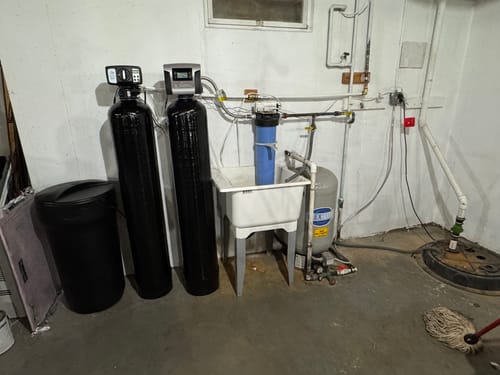
I'll be honest – before this journey, I had no idea what catalytic carbon or bone char even meant. My research led me down a fascinating rabbit hole of water treatment technologies.
Catalytic carbon, I learned, is a specially treated activated carbon that's enhanced to remove chloramines and hydrogen sulfide more effectively than regular carbon.
Unlike standard granular activated carbon, catalytic carbon maintains its effectiveness longer and doesn't require frequent backwashing. This was important because our household of four uses about 250 gallons per day, and I needed something that could handle consistent demand.
The bone char component intrigued me even more. Bone char is specifically effective at removing fluoride from water through a process called adsorption. The calcium phosphate in bone char creates tiny pores that attract and trap fluoride molecules as water passes through.
What sold me on this particular combination was learning that the upflow design allows for better contact time between water and filter media. Traditional downflow systems can create channeling, where water finds the easiest path through the media, reducing treatment effectiveness.
I compared this system against reverse osmosis for the whole house, but the water waste and complexity made that option less appealing for our situation.
Installation Experience: Where Documentation Really Matters
Here's where things got frustrating – and this matches exactly what other customers have mentioned in reviews I read later.
The installation documentation for the top-down filter unit was genuinely confusing.
I scheduled the installation for a Saturday morning, thinking I'd have the whole weekend to troubleshoot if needed. The system arrived well-packaged, and the tank itself looked robust and professionally manufactured. The stainless steel fittings felt solid, and the overall build quality exceeded my expectations.
But when I opened the installation manual, the diagrams for source water inflow and filtered water outflow were unclear. The manual seemed to assume familiarity with plumbing configurations that I didn't have.
Here's what tripped me up specifically:
The valve positioning wasn't clearly labeled in the diagrams, and the text referenced "top-down operation" without explaining how this differed from standard configurations I'd seen in YouTube videos.
I spent three hours on Saturday trying to figure out the proper connection sequence. The frustration was real – here I had this expensive system sitting in my garage, and I couldn't confidently proceed without risking improper installation.
Since it was the weekend, SoftPro's technical support wasn't available. I tried calling the number in the manual twice and got voicemail both times.
Finally, on Monday morning, I reached their technical support team. The representative was knowledgeable and walked me through the connection process over the phone. Once I understood the proper sequence, the installation took about two hours to complete properly.
System Specifications and Real-World Performance

The system I purchased handles up to 12 gallons per minute flow rate, which covers our household's peak demand during morning routines when multiple fixtures run simultaneously.
The tank dimensions are 10 inches diameter by 54 inches tall, requiring about 8 square feet of floor space in my utility room.
The catalytic carbon media bed contains approximately 1.2 cubic feet of specially treated coconut shell carbon. According to specifications, this should effectively remove chlorine, chloramines, hydrogen sulfide, and some organic compounds for 500,000 to 1,000,000 gallons depending on incoming water quality.
The bone char component uses 0.8 cubic feet of food-grade bone char specifically sized for fluoride removal. This media typically lasts 12-18 months in residential applications, though performance depends on incoming fluoride levels.
After installation, I tested our water quality using both test strips and a digital TDS meter. Initial results were impressive:
Incoming water: 340 PPM TDS, strong chlorine odor, slight metallic taste
Post-filtration: 285 PPM TDS, no detectable chlorine odor, clean taste
The system operates at 45 PSI with minimal pressure drop. Even during peak usage times, I haven't noticed any significant reduction in water pressure at fixtures throughout the house.
Daily Living Impact: The Real-World Difference
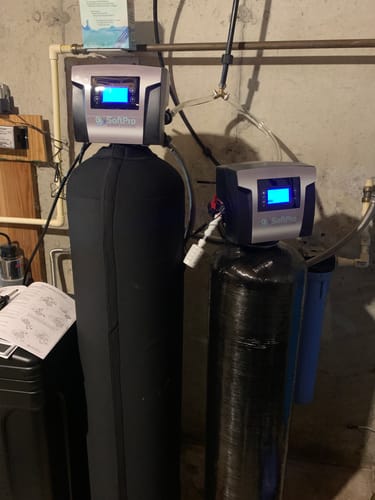
The change in our daily water experience was noticeable within 48 hours of installation.
The most immediate improvement was eliminating the chlorine smell that used to hit you when walking into bathrooms after someone showered. That chemical odor that reminded me of public swimming pools was completely gone.
My daughter, who had been our harshest water critic, started drinking tap water again without complaints. She actually commented that water "tastes normal again" – which was a huge victory.
Coffee taste improved significantly. I use a pour-over brewing method, and the difference in flavor clarity was remarkable. The underlying chemical taste that I'd grown accustomed to was no longer masking the actual coffee flavors.
Skin and hair improvements took about two weeks to become apparent.
My skin felt less dry after showers, and I noticed I wasn't reaching for lotion as frequently. My wife mentioned that her hair felt softer and less brittle, though she wasn't sure if it was related to the water system initially.
An unexpected benefit was reduced soap scum buildup in showers and on dishes. While this system doesn't soften water like a traditional water softener would, removing chlorine appears to have reduced the rate at which soap residue accumulates.
Laundry seems brighter, though this could be placebo effect. What I can say definitively is that clothes don't have that slight chemical smell they used to have after washing.
Maintenance Requirements and Operating Costs
The system requires minimal routine maintenance, which was a key factor in my decision.
Unlike salt-based water softeners, there's no regeneration cycle, salt additions, or electrical requirements. The system operates purely on water pressure and doesn't consume any utilities during normal operation.
The bone char media requires replacement every 12-18 months, depending on usage and incoming fluoride levels. Replacement media costs approximately $180 including shipping, and the process involves removing the tank head and exchanging the old media for new.
Catalytic carbon media typically lasts 3-5 years in residential applications. Replacement cost is around $120 for the media, plus labor if you choose professional service.
I track our water usage monthly, and we average 7,200 gallons per month for our family of four.
Based on manufacturer specifications, the bone char should handle our usage for approximately 15 months before requiring replacement. The catalytic carbon should last 4-5 years at our consumption rate.
Annual operating costs break down to approximately $140 for bone char replacement plus $25 annually for catalytic carbon replacement (prorated over its lifespan). This totals roughly $165 per year, or $13.75 per month for whole-house fluoride and chlorine removal.
Compared to buying bottled water or using pitcher filters for our consumption, this system pays for itself within 18 months while providing treatment for all water uses, not just drinking.
Honest Assessment: What Works and What Could Be Better
This system delivers exactly what it promises for chlorine and fluoride removal, but there are some limitations worth understanding.
The upflow design works excellently for maintaining media contact time and preventing channeling. Water quality consistency has been impressive over seven months of use, with no noticeable degradation in performance.
Build quality exceeds expectations. The tank construction feels robust, fittings are high-quality stainless steel, and the system operates silently. I don't hear any noise from the system during operation.
However, the installation documentation seriously needs improvement.
For a system in this price range, the installation manual should be crystal clear with detailed diagrams and step-by-step instructions. The confusion I experienced could have been easily avoided with better documentation.
The system doesn't address water hardness, iron, or bacterial issues. If you have multiple water quality problems, you'll need additional treatment components or a different system entirely.
Space requirements are significant. The 54-inch tank height requires adequate ceiling clearance for media replacement, and the 10-inch diameter footprint needs to be considered in utility room planning.
Customer service availability on weekends would be beneficial, especially since many homeowners tackle installation projects during weekends when they have time available.
Final Verdict: Is This System Worth the Investment?
After seven months of use, I'm satisfied with this purchase and would make the same decision again.
The system effectively addresses the specific water quality issues we faced – chlorine taste and odor, plus fluoride removal. Performance has been consistent, maintenance requirements are reasonable, and the quality of life improvement for my family makes the investment worthwhile.
This system is ideal if you specifically need fluoride and chlorine removal for your whole house.
The catalytic carbon and bone char combination is uniquely effective for these contaminants. If these are your primary concerns and you want a low-maintenance solution, this system delivers excellent value.
However, if you have multiple water quality issues like hardness, iron, or bacterial contamination, you might need a more comprehensive treatment system or multiple components.
Would I recommend it to others?
Absolutely, with the caveat that you understand exactly what water quality Visit website issues you're trying to solve.
Get your water tested first, confirm that fluoride and chlorine are your primary concerns, and be prepared for potentially confusing installation documentation. Once properly installed, this system provides reliable, effective treatment with minimal ongoing maintenance.
The improvement in our daily water experience – from drinking and cooking to showering and laundry – has been worth every penny of the investment.