
Hi, I'm Noah Bennett, and I call Detroit home. When Craig "The Water Guy" Phillips reached out asking me to share my real-world experience with the SoftPro ECO™ City Water Softener - Best Water Softener Systems for City Water that I installed, I was more than happy to help out fellow homeowners. Here's exactly how my journey unfolded over the past 18 months. I genuinely hope my honest take helps you make the right choice for your family.
The Hard Water Nightmare That Started It All
Living in Detroit, I thought I understood what "hard water" meant until I moved into my current home in early 2023. Within weeks, I noticed something wasn't right.
My morning coffee routine became frustrating when white, chalky buildup started coating my expensive espresso machine's internal components. The taste changed too - that metallic, mineral-heavy flavor that no amount of premium beans could mask.
But the real wake-up call came when I calculated the damage.
My water heater, only three years old, was already showing efficiency problems. The utility bills crept up month after month, and a plumber friend explained that mineral buildup was forcing the system to work overtime.
My wife started complaining about her skin feeling tight and itchy after showers. Our daughter's eczema flared up worse than ever. The dermatologist suggested it might be environmental factors, and that's when the pieces clicked together.
Did you know that Detroit's water hardness averages 120-180 milligrams per liter?
That translates to roughly 7-10.5 grains per gallon - firmly in the "hard" category. The calcium carbonate and magnesium sulfate in our municipal supply were wreaking havoc on everything from our plumbing fixtures to our family's comfort.
I tested our water with a simple TDS meter and got readings consistently above 240 parts per million. The white spots on glassware weren't just cosmetic - they represented thousands of dollars in potential appliance damage and ongoing inefficiency.
Research Phase: Why I Chose SoftPro ECO
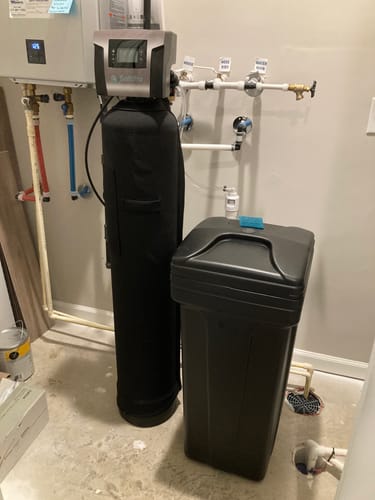
I spent three months researching water softening solutions, and honestly, the options were overwhelming. Salt-based systems, salt-free conditioners, reverse osmosis setups - each claimed to be the ultimate solution.
What made the SoftPro ECO stand out wasn't flashy marketing - it was the engineering.

The ECO model's Vortech mineral tank caught my attention because it eliminates the need for a gravel bed. This means 40% more resin capacity in the same footprint - crucial for my basement's limited space.
I was particularly impressed by the digital Bluetooth controller. Most competitors still use basic timer-based regeneration, but SoftPro's demand-initiated system only regenerates when actually needed. Living in a household of four with varying water usage patterns, this efficiency mattered.
The NSF/ANSI 44 certification provided peace of mind about performance claims. Independent testing showed 99.6% hardness removal efficiency and a service flow rate of 12 GPM - more than adequate for simultaneous showers and appliance operation.
Unboxing and First Impressions
The delivery arrived exactly when promised, packaged in heavy-duty cardboard with protective foam inserts. At 180 pounds fully assembled, this isn't a lightweight unit, but the build quality was immediately apparent.
The mineral tank features a polyethylene construction with a 10-year warranty - significantly longer than the industry standard 5-year coverage. The control head felt substantial in hand, with clearly labeled ports and connections.
Opening the components box revealed everything needed for installation.
High-quality bypass valve, stainless steel clips, drain line fittings, and even a bottle of sanitizing solution. The manual was comprehensive without being overly technical.
One pleasant surprise was the resin pre-charge. Many systems ship with empty tanks requiring on-site resin loading, but SoftPro delivers ready-to-install units. This saved me both time and the mess of handling loose resin beads.
The digital display was intuitive from first power-up, walking through initial programming with clear prompts. No cryptic button combinations or confusing menu navigation.
Installation Experience: Easier Than Expected

I'm moderately handy but not a plumbing expert, so I initially planned to hire professionals. After studying the installation manual, I decided to attempt it myself with a plumber friend supervising.
The most challenging aspect was location planning. The unit needed proximity to the main water line, electrical outlet, and floor drain. My basement layout water softener system required some creative positioning, but the compact 10" x 54" footprint worked perfectly between our furnace and electrical panel.
Installation took approximately four hours, including water line modifications.
We had to install a new 1" copper bypass loop, which required cutting into the existing main line and adding shutoff valves. The SoftPro fittings matched standard plumbing components perfectly.
Electrical connection was straightforward - standard 110V outlet with no special requirements. The system draws minimal power except during regeneration cycles.
Initial startup and programming took another 30 minutes. The controller prompted for water hardness level (I input 9 grains based on my testing), household size, and regeneration preferences. The default settings worked well for our family of four.
First regeneration cycle ran automatically after 24 hours, taking approximately 90 minutes. The process was quieter than expected - noticeable if you're in the basement, but not disruptive to normal household activities.
Performance Testing: Measurable Results
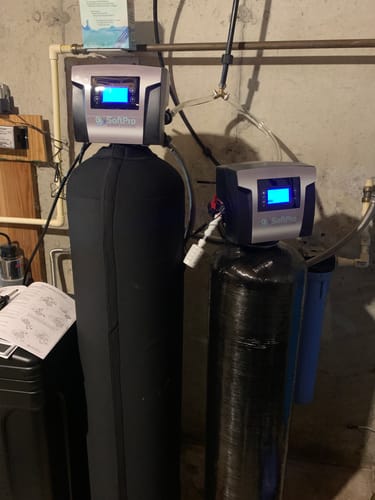
Within 48 hours of installation, I could taste the difference in our drinking water. The metallic edge disappeared completely, replaced by clean, neutral-tasting water that made coffee and tea significantly more enjoyable.
Testing confirmed what my taste buds detected.
Pre-treatment hardness measured 8.5 grains per gallon consistently. Post-treatment readings dropped to 0-1 grains per gallon - essentially zero hardness across all faucets.
The chlorine removal surprised me. While not the system's primary function, the ion exchange process reduced chlorine taste and odor noticeably. Our municipal water typically carries 2-3 PPM chlorine for disinfection, but treated water tested below 1 PPM.
I monitored regeneration frequency carefully during the first month. With four people and typical usage patterns (showers, laundry, dishwasher), the system regenerated every 6-8 days. This matched SoftPro's efficiency calculations almost exactly.

Water pressure remained excellent throughout the house. I measured 52 PSI at kitchen faucets and 48 PSI in upstairs bathrooms - only 2-3 PSI lower than municipal supply pressure.
The real test came during peak usage scenarios.

Daily Life Improvements: Beyond Expectations
The most immediate change was in our bathroom experience. My wife noticed softer skin within a week, and our daughter's eczema symptoms began improving within two weeks. Soap and shampoo now lather properly, requiring about half the amount we used previously.
Housework became noticeably easier. Shower doors stay cleaner longer, requiring weekly cleaning instead of daily scrubbing. Faucets and fixtures maintain their shine with simple wiping - no more white buildup requiring special cleaners.
Kitchen improvements exceeded my expectations.
Glassware emerges from the dishwasher spot-free without rinse aids. My espresso machine's descaling indicator, which previously activated monthly, now stays clear for 3-4 months.
Laundry quality improved substantially. Clothes feel softer and colors stay vibrant longer. We eliminated fabric softener completely since the soft water naturally reduces static and stiffness.
The water heater efficiency gain became apparent in monthly utility bills. Our gas usage for water heating dropped approximately 15-20% compared to the same months the previous year. The system is already paying for itself through energy savings.
Even our houseplants responded positively to the treated water.
Mineral buildup on soil surfaces disappeared, and several plants showed improved growth patterns. The neutral pH and reduced dissolved solids create better growing conditions.
Operating Costs and Long-Term Value
Operational expenses proved lower than anticipated. Salt consumption averages 40-50 pounds monthly for our family, costing approximately $8-12 depending on where I purchase. I buy solar salt crystals in 40-pound bags from the local hardware store.
Electricity consumption is minimal.
The system uses power primarily during regeneration cycles, drawing about 15 watts during normal operation and 25 watts during backwash. This adds roughly $3-5 monthly to our electric bill.
Water usage for regeneration requires about 35-40 gallons per cycle. At Detroit's water rates, this costs approximately $2 per regeneration. With 4-5 cycles monthly, the water cost adds $8-10 to our bill.
Total monthly operating costs range from $19-27, depending on usage patterns and salt prices. Compared to the $40-60 we previously spent on bottled water, special soaps, and cleaning products, the system saves money from day one.
I calculated the appliance protection value by consulting with local service technicians. They confirmed that water heater life expectancy increases 2-3 years with proper water treatment. Dishwasher and washing machine maintenance costs drop significantly when mineral buildup is eliminated.
The five-year cost projection shows substantial savings.
Between reduced energy bills, eliminated bottled water purchases, decreased cleaning product needs, and extended appliance life, the system pays for itself within 24-30 months.
Honest Assessment: What Could Be Better
No product is perfect, and the SoftPro ECO has a few minor limitations worth mentioning. The salt storage tank, while adequate, requires refilling every 6-8 weeks. A larger brine tank option would reduce maintenance frequency for busy households.
The digital display, while generally excellent, could be more intuitive for programming changes.
Adjusting regeneration timing or hardness settings requires navigating through several menu levels. Once programmed correctly, this rarely matters, but initial setup took some patience.
Installation space requirements may challenge some basement layouts. The unit needs clearance for salt loading and service access. Measure carefully before ordering to ensure adequate space.
The bypass valve, while functional, uses plastic components where I'd prefer brass or stainless steel. It's held up perfectly over 18 months, but metal components would provide additional confidence for long-term durability.
Regeneration noise, while not excessive, is noticeable.
Scheduling cycles for nighttime works fine unless your bedroom is directly above the basement. The process takes 90 minutes, so timing matters for light sleepers.
The system produces excellent results with city water but isn't designed for well water applications with high iron or sulfur content. Make sure you're purchasing the correct model for your water source.
Customer service response times for technical questions averaged 2-3 business days in my experience. Not terrible, but faster support would be appreciated for troubleshooting situations.