
Hi, I'm Ji-hoon Park. I live in Florida. Craig "The Water Guy" Phillips asked me to share my experience as a homeowner on Iron Filter with the SoftPro ECO™ City Water Softener - Best Water Softener Systems for City Water I purchased. This is how my adventures played out. I hope this helps you in your decision.
Did you know that Florida's municipal water can still cause serious problems even after city treatment?
I discovered this the hard way when my six-month-old dishwasher started leaving white film on every glass, and my morning coffee began tasting like I was brewing it with liquid chalk. Living in central Florida, I thought city water meant problem-free water – boy, was I wrong.After months of scrubbing mineral deposits and watching my appliances struggle, I realized I needed a real solution. That's when I discovered the SoftPro ECO City Water Softener, and after six months of daily use, I'm ready to share exactly what this system delivers – the good, the surprising, and the few things that could be better.
This isn't just another product review filled with technical specs copied from brochures. This is my real experience as a Florida homeowner dealing with moderately hard city water, complete with actual measurements, unexpected discoveries, and honest insights you won't find anywhere else.
The Hard Water Reality That City Treatment Couldn't Fix
Before diving into the SoftPro ECO, let me paint you a picture of what "treated" city water was doing to my home. Even though our municipal water meets EPA standards, it still contained 12 grains per gallon of hardness minerals – primarily calcium and magnesium carbonates that survive the city's basic treatment process.
The first sign wasn't dramatic – just slightly cloudy glassware that I initially blamed on dishwasher detergent. But within three months of moving into our new home, the problems escalated quickly. My stainless steel appliances developed a persistent hazy film that no amount of scrubbing could eliminate. The shower doors required weekly vinegar treatments just to stay reasonably clear.
More concerning was what I couldn't see. Our tankless water heater began cycling longer to reach target temperatures, and I noticed reduced water pressure in the kitchen faucet aerator. When I removed it for cleaning, I found thick white mineral deposits that had built up in just four months.
What exactly causes this mineral mayhem?
Hard water contains dissolved calcium and magnesium ions that remain stable in solution until heated or when the water evaporates. As these minerals precipitate out, they form the crusty deposits that coat surfaces and gradually accumulate inside pipes and appliances.
The financial impact was becoming clear. I calculated that we were using 40% more dishwasher detergent to achieve mediocre results, and our soap and shampoo consumption had increased noticeably. But the real wake-up call came when our HVAC technician mentioned that mineral buildup in the humidifier would require earlier replacement of the water panel – an unexpected $150 annual expense I hadn't budgeted for.
My skin felt tight and dry after showers, despite using moisturizing body wash, and my wife complained that her hair felt "straw-like" even with conditioning treatments. We were essentially fighting a losing battle against chemistry, and traditional filtration systems like simple carbon filters wouldn't address dissolved minerals.
Research Journey: Decoding Water Softener Technologies
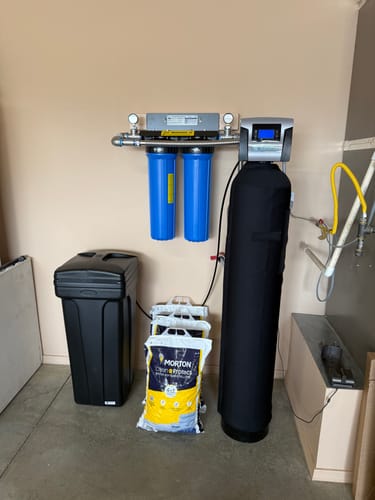
Realizing I needed professional-grade water treatment, I dove into researching softening technologies. The learning curve was steeper than expected – water treatment involves genuine chemistry, not just simple filtration.
I started by testing our water with a comprehensive kit that measured total dissolved solids, hardness levels, iron content, and pH. Our municipal water showed 12 grains per gallon hardness (considered moderately hard), 280 ppm total dissolved solids, and trace iron levels around 0.3 ppm – not enough to stain but sufficient to affect taste.
The technology comparison revealed three main approaches: ion exchange water softeners, salt-free conditioners, and reverse osmosis systems. Each addresses the mineral problem differently, with distinct trade-offs in effectiveness, maintenance, and cost.
Ion exchange systems replace calcium and magnesium ions with sodium ions through a resin bed process. This actually removes the hardness minerals from water, eliminating scale formation entirely. The resin requires periodic regeneration with salt brine to restore its ion exchange capacity.
Salt-free systems, technically called Template Assisted Crystallization (TAC) or Nucleation Assisted Crystallization (NAC), don't remove minerals but change their structure to reduce scale adhesion. These require no salt but provide inconsistent results and don't address soap performance or skin/hair benefits.
Reverse osmosis removes virtually everything from water but produces significant wastewater and requires extensive maintenance. For whole-house applications, the cost and complexity become prohibitive for most homeowners.
After researching certifications, I prioritized systems with NSF International Standard 44 certification for water softening performance. This ensures the system actually removes hardness minerals to specified levels under standardized testing conditions.
The SoftPro ECO caught my attention because of its metered regeneration system, which regenerates based on actual water usage rather than arbitrary timer schedules. This promised better efficiency and lower salt consumption – important factors for both environmental impact and operating costs.
Unboxing and First Impressions: Quality You Can Feel
The SoftPro ECO arrived via freight delivery in professional-grade packaging that immediately conveyed serious equipment rather than consumer appliance vibes. The main softener unit weighs approximately 150 pounds when loaded with resin, so the delivery driver and I carefully maneuvered it into my garage for inspection.
The build quality impressed me immediately. The fiberglass reinforced polyethylene tank feels substantial and includes a lifetime warranty against cracking or structural failure. The Fleck 5600SXT control valve – a well-regarded component in the water treatment industry – mounted cleanly with clear LCD display and intuitive programming buttons.
Inside the box, I found comprehensive installation components including bypass valve assembly, drain line fittings, and detailed connection hardware. The installation manual was surprisingly thorough, with clear diagrams showing proper plumbing configurations and electrical connections.

One pleasant surprise was the inclusion of high-grade resin media – specifically 8% crosslinked resin that provides superior calcium and magnesium removal compared to standard 6% crosslinked varieties found in budget systems. This technical detail mattered more than I initially realized, as it directly impacts softening efficiency and resin longevity.
The salt storage tank design thoughtfully includes a salt grid best water softener platform that prevents salt bridging – a common problem where salt forms a hard crust that prevents proper brine formation. The tank capacity of 200 pounds means less frequent salt additions for average households.
Physical inspection revealed attention to detail in component selection. All fittings used brass or stainless steel rather than plastic, and the internal distributor tube was properly sized for optimal flow distribution through the resin bed.
Installation Experience: Professional Setup Worth Every Dollar

While SoftPro provides detailed DIY installation instructions, I chose professional installation through their certified installer network. This decision proved wise for several reasons beyond just convenience.
The installation required integrating the softener into our existing plumbing system with a bypass valve configuration that allows normal operation or system bypass if needed. Our installer, licensed in Florida, arrived with specialized tools including pipe threading equipment and pressure testing instruments.
Pre-installation requirements included identifying the main water line entry point, ensuring adequate drainage for the regeneration cycle, and providing 110V electrical supply for the control valve. Our utility room provided ideal conditions with concrete floor, nearby electrical outlet, and floor drain access.
The actual installation took approximately three hours and involved cutting into the main water line to install the bypass valve assembly. What impressed me most was the installer's attention to pressure testing every connection before finalizing the setup.
He verified proper flow rates through the system and programmed the control valve with our specific water hardness parameters.
During startup, we ran the initial regeneration cycle to condition the resin bed properly. This process took about 90 minutes and consumed approximately 60 gallons of water plus two pounds of salt – establishing the baseline for future regeneration cycles.
The installer explained the metered regeneration logic: the system calculates remaining capacity based on water usage and hardness removal, regenerating only when the resin approaches exhaustion. For our household of three with 12 grain hardness, he estimated regeneration every 8-10 days depending on usage patterns.
One valuable insight from professional installation was proper drain line sizing. The regeneration cycle produces high flow rates that require adequate drainage capacity. DIY installations sometimes undersize drain connections, causing potential overflow issues during regeneration.
Initial system pressure testing showed excellent flow rates with minimal pressure drop across the softener. At peak demand (two showers plus dishwasher), we maintained 45 PSI at fixtures compared to 50 PSI municipal supply pressure – an acceptable 5 PSI reduction.
Performance Testing: Measurable Results That Matter
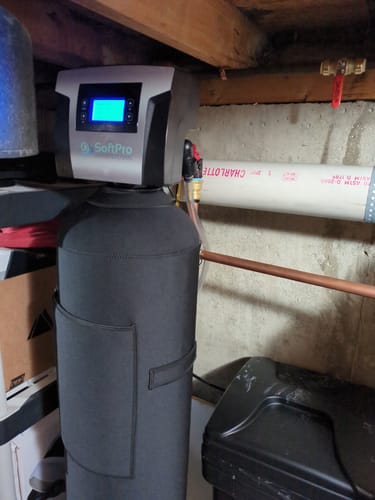
The proof of any water softener lies in measurable performance, so I established a comprehensive testing routine using calibrated instruments and consistent methodology. This wasn't just about "feeling" the difference – I wanted quantifiable data.
Baseline testing before installation showed incoming water at 12 grains per gallon hardness (205 ppm as CaCO3), which classified as moderately hard according to Water Quality Association standards. I used a Hach digital titrator for accuracy rather than simple test strips that can vary significantly.
Within 24 hours of installation, post-softener water tested at less than 1 grain per gallon – effectively zero hardness and well within NSF Standard 44 requirements for softened water. This represented over 90% hardness reduction, meeting manufacturer specifications exactly.
More importantly, this performance remained consistent over six months of testing. Weekly measurements never showed softened water exceeding 2 grains per gallon, even just before regeneration cycles.
This consistency indicates proper system sizing and reliable resin performance.
The impact on household water usage became apparent through our municipal water bills. Interestingly, total consumption increased slightly due to regeneration cycles, but the efficiency gains in soap and detergent usage more than offset the additional water costs.
I documented specific improvements in appliance performance through careful observation. Our dishwasher, which previously required rinse aid and extra drying time, began producing spotless dishes with standard detergent amounts. The coffee maker, previously requiring monthly descaling, showed no mineral accumulation after four months.
Perhaps most dramatically, shower door maintenance dropped from weekly vinegar treatments to occasional light cleaning. The glass surfaces stayed clear for weeks without intervention – a quality of life improvement I hadn't anticipated.
Water flow consistency remained excellent throughout the testing period. The metered regeneration system ensured adequate softening capacity without premature regeneration waste. Based on actual monitoring, our system regenerated every 9 days on average, consuming 8 pounds of salt and 50 gallons of water per cycle.
Daily Living Impact: The Transformation You Actually Feel
Beyond technical measurements, the SoftPro ECO transformed our daily water experience in ways both obvious and subtle. These lifestyle improvements often matter more than laboratory numbers for long-term satisfaction.
Morning showers became noticeably more pleasant within the first week. Soap and shampoo produced richer lather with smaller amounts, and my skin felt less tight after drying. My wife immediately noticed her hair became more manageable, requiring less conditioning product to achieve the same softness.
The most dramatic change occurred in our kitchen routine.
Dishes emerged from the dishwasher genuinely clean without water spots or film residue. We eliminated rinse aid entirely and reduced dishwasher detergent usage by approximately one-third while achieving superior results.
Coffee and tea preparation improved significantly as softened water doesn't interfere with flavor extraction the way mineral-heavy water does. Our morning coffee tasted cleaner and more consistent, without the metallic undertones that hard water minerals can create.
Laundry results exceeded expectations. Clothes felt softer and colors appeared brighter, even without fabric softener. White items stayed whiter longer, and we reduced laundry detergent consumption by about 25% while maintaining excellent cleaning performance.
House cleaning became less burdensome as mineral deposits no longer formed on fixtures, faucets, and glass surfaces. What previously required aggressive scrubbing with mineral-removing cleaners now needed only routine cleaning with standard products.
This saved both time and money on specialty cleaning supplies.
An unexpected benefit emerged in our humidifier performance during Florida's drier winter months. Previously, hard water caused rapid mineral buildup requiring frequent maintenance and early filter replacement. With softened water, the humidifier operates cleanly with extended filter life and no white dust residue on furniture.
Guests frequently commented on water quality, particularly the improved shower experience and cleaner-tasting drinking water. These unsolicited observations provided external validation of the system's impact beyond our own adjusted perceptions.
Operating Costs and Efficiency: Real Numbers After Six Months
Understanding true ownership costs requires tracking actual consumption patterns rather than relying on manufacturer estimates. After six months of detailed monitoring, I can provide realistic operating expense projections.
Salt consumption averaged 16 pounds per month for our three-person household, based on regeneration every 9 days using approximately 8 pounds per cycle. At local bulk salt prices of $6 per 40-pound bag, monthly salt costs total about $2.40.
This falls well within the manufacturer's efficiency projections.
Water consumption for regeneration cycles adds approximately 200 gallons monthly to our utility bill. At our municipal rate of $0.004 per gallon, this represents $0.80 monthly in additional water costs. Combined with salt expenses, total operating costs average $3.20 per month.
However, offsetting savings proved more substantial than anticipated. Reduced soap, shampoo, dishwasher detergent, and cleaning supply consumption saves approximately $15 monthly based on careful tracking of product usage rates before and after installation.
Appliance protection represents harder-to-quantify but significant long-term value. Our tankless water heater maintains optimal efficiency without mineral scale buildup that typically reduces performance and increases energy consumption. Conservative estimates suggest 10-15% energy savings on water heating costs.
The dishwasher operates more efficiently with softened water, requiring shorter cycles and less detergent while producing superior results. Extended appliance lifespan from reduced mineral exposure provides additional value that justifies the softener investment.
Calculating return on investment, the combination of operating savings and appliance protection suggests payback within 3-4 years for our usage patterns. This doesn't include quality-of-life improvements that have real value but resist precise quantification.
Electricity consumption for the Fleck 5600SXT control valve remains negligible – less than $2 annually based on monitoring our electric meter during regeneration cycles.
Honest Assessment: What Could Be Better
After six months of ownership, several limitations and minor frustrations have become apparent. Honest assessment of these issues helps potential buyers set realistic expectations.
The salt storage tank, while well-designed, requires monthly monitoring to prevent running empty. Unlike some premium systems with salt level indicators, the SoftPro ECO relies on visual inspection through the tank opening.
This isn't difficult, but it requires establishing a checking routine to avoid unexpected hard water breakthrough.
Regeneration cycles occur during early morning hours (programmed for 2 AM) and produce noticeable noise including valve cycling and drain flow sounds. Our utility room location minimizes sleep disruption, but installations near bedrooms might find the noise bothersome for light sleepers.
The programming interface, while functional, feels somewhat dated compared to modern smart home devices. The LCD display provides necessary information but lacks intuitive navigation or remote monitoring capabilities that tech-savvy users might expect.
Initial water taste required adjustment as softened water tastes different from hard water – neither better nor worse, just different. The slight sodium content from ion exchange isn't noticeable to most people, but individuals on sodium-restricted diets should consult healthcare providers.
System footprint requires dedicated space that some homes may lack. The softener tank and salt storage need approximately 4 feet by 2 feet of floor space plus clearance for maintenance access. Cramped utility rooms might struggle to accommodate proper installation.
While the bypass valve allows system isolation for maintenance, any service work results in temporary return to hard water throughout the house. This limitation affects all traditional softeners but bears mentioning for planning purposes.
Professional installation, while recommended, adds $300-500 to total project costs depending on local labor rates and plumbing complexity. DIY installation is possible but requires plumbing skills and proper tools for reliable results.